Reading Candle Smoke: What Color and Direction Reveal About Your Spell
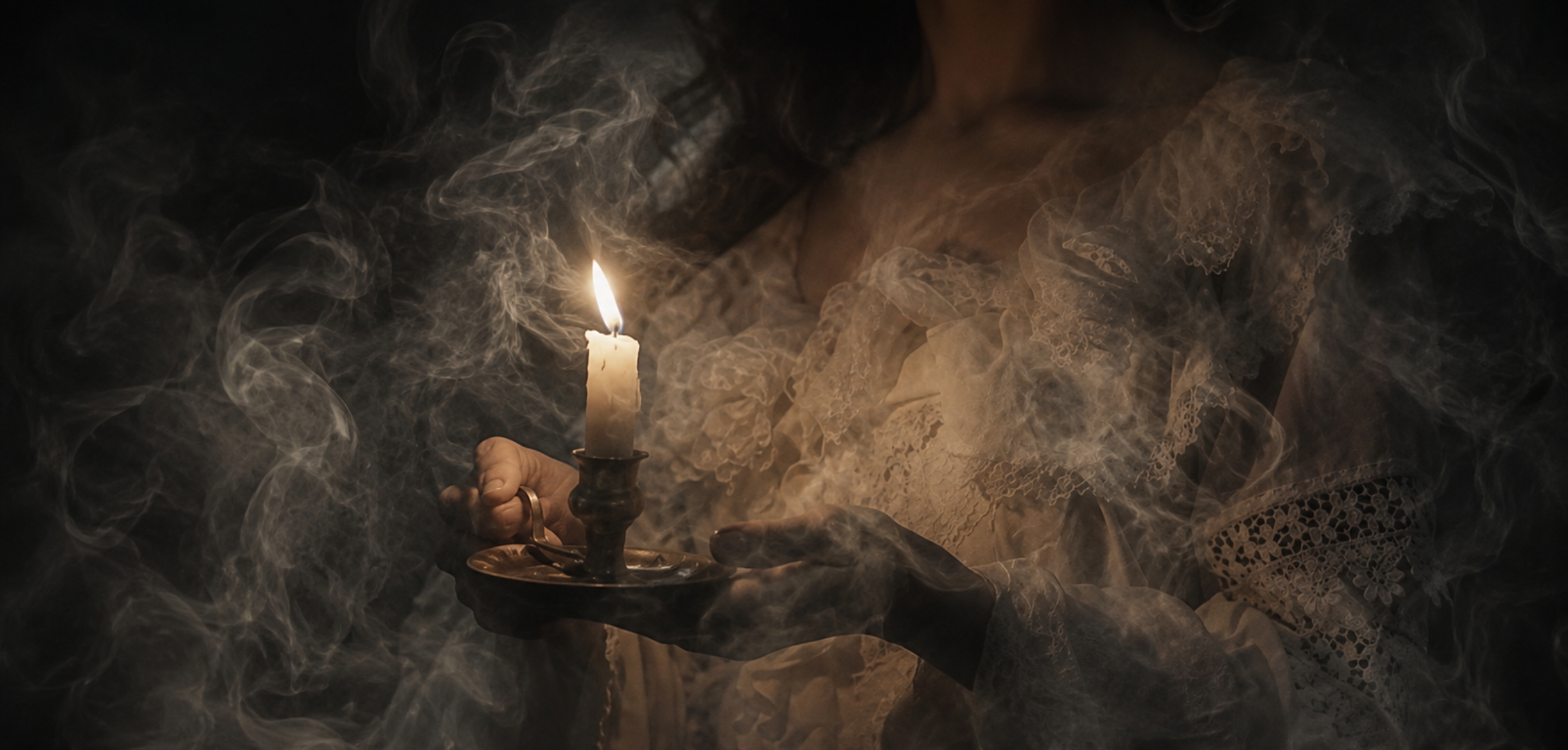
Reading candle smoke is subtle. It rises, disperses, and disappears before you've fully registered what it was doing. It requires a different quality of attention than the flame does, softer and more peripheral, less focused and more open.
The smoke carries real information. In some traditions it's considered even more direct than the flame as a channel of communication, because smoke moves between worlds. It rises from the physical burning into the air, from the material into the immaterial. Across virtually every culture that has used fire in ritual, smoke has been understood as the carrier, the thing that takes what is offered on the ground and brings it upward to wherever it needs to go.
In candle magic, smoke is part of the reading. Not the loudest part, but a meaningful one. This guide covers what smoke color and smoke behavior reveal about your working, and how to incorporate smoke reading into your practice.
What Is Candle Smoke Reading?
Candle smoke reading is the practice of observing and interpreting the behavior, color, and movement of smoke produced during a candle magic working as a source of information about the spell and its trajectory.
It is related to libanomancy, the ancient practice of reading the smoke of incense, and to capnomancy, the broader art of smoke divination. Both have long histories across ancient Greece, Egypt, Mesopotamia, and many other cultures where smoke was considered a direct line of communication between the human and divine realms.
The logic is consistent across these traditions: smoke rises. It moves from the earthly to the ethereal. What the smoke does as it makes that journey reflects something about the nature of what is being offered, the intention being sent, and the conditions surrounding the working.
You don't need to do anything special to read candle smoke. You just need to pay attention to it rather than ignore it. Observe the color of the smoke when it appears, which direction it moves, how dense or thin it is, whether it rises cleanly or disperses erratically, and whether it seems to respond to anything happening in the working.
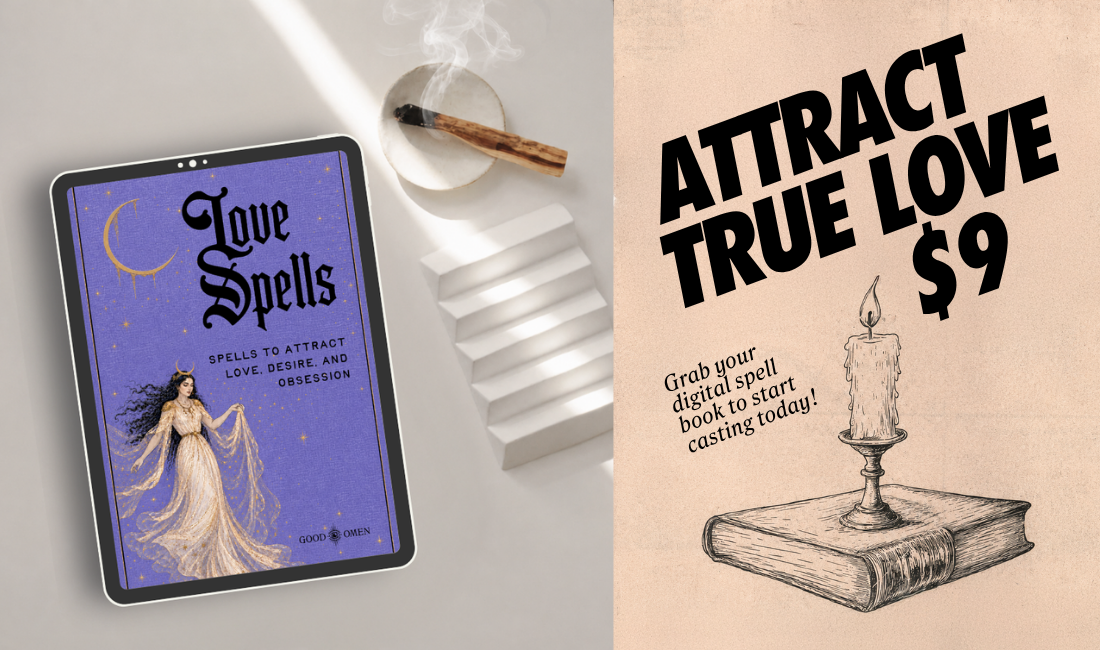
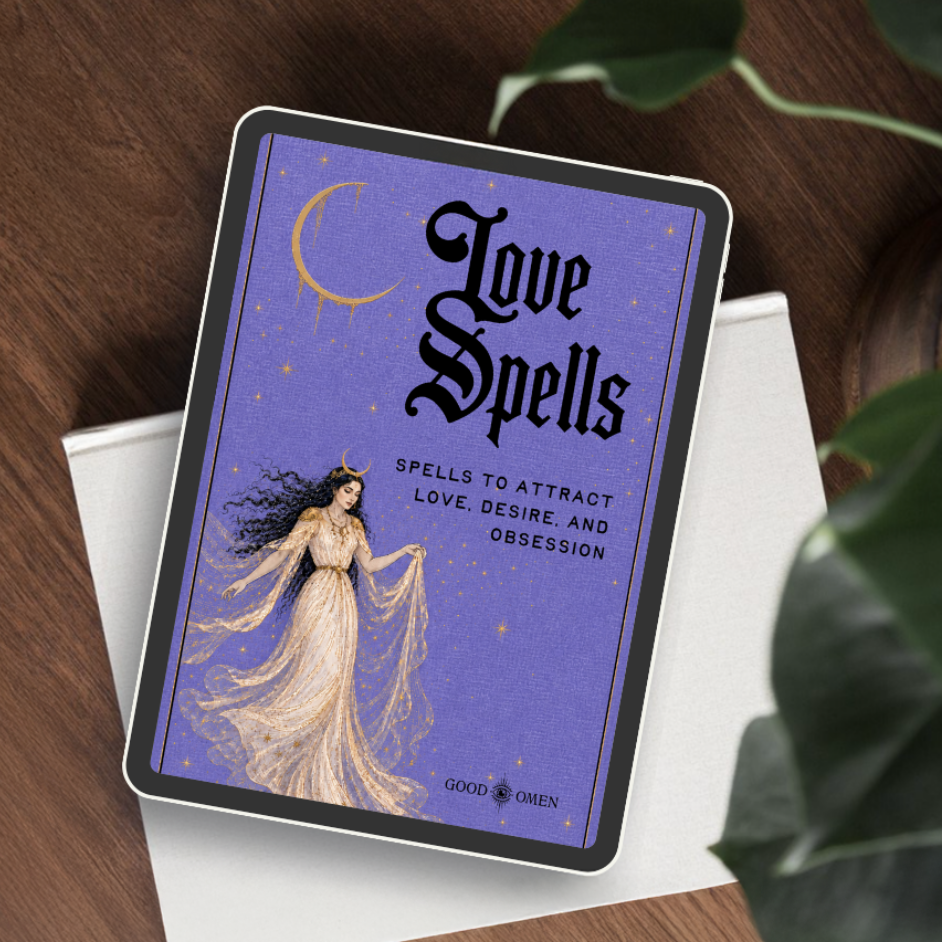
Love Spells That Work: Spells to Attract Love, Desire, and Obsession is a beautifully crafted collection of love rituals, attraction magic, and relationship spellwork designed to help you call in romance, deepen emotional bonds, reignite passion, and become impossible to forget.
Inside this digital grimoire, you’ll discover 22 love spells, including:
Honey jar spell for sweetening love and attraction
Spell to find a lover
Spell to make someone think of you nonstop
Spell to bring someone to you
Seductive spell to make him crave you
Nurturing spell to strengthen a relationship
Traditional spells to make someone love you using candles, herbs, oils, and petitions
Love binding spell for deeper energetic connection
Cleansing spell to remove negativity from a relationship
Emotional healing spells to bring back a lover
Magnetic love spell chant for attraction and manifestation
Also includes:
Step-by-step instructions for every ritual
Self-love and confidence spellwork
Guide to magical tools, herbs, stones, and oils
Soulmate attraction spells
Passion and reconciliation rituals
Candle magic and moon rituals
Perfect for beginner witches, spiritual practitioners, manifestation lovers, and anyone seeking deeper love, passion, obsession, and connection.
Instant digital download — begin your spellwork tonight. ✨
Starting Point: Most Candle Smoke Is Normal
Before interpreting candle smoke, it's worth establishing what normal looks like so that meaningful deviations stand out clearly.
A well-made candle with a properly trimmed wick, burning in a reasonably still space, will produce very little visible smoke during most of its burn. The combustion is efficient, the wax is vaporizing and burning cleanly, and what smoke there is tends to be thin, pale, and quickly invisible.
Heavy, persistent smoke is not normal for a well-prepared candle in good conditions. When it appears, particularly in significant quantities or with distinctive color, that deviation from normal is what carries meaning.
Similarly, a candle that produces no smoke at all throughout its entire burn is noteworthy in its own right.
Smoke behavior that is meaningfully readable tends to appear at specific moments in the working rather than consistently throughout, at ignition, at a moment when the intention sharpens or shifts, at the point when the candle is nearly burned down, or when something changes in the energy of the space. Pay particular attention to those moments.
The Color of the Smoke
White smoke
White or pale gray smoke is the most positive smoke color in candle magic reading and the most consistently interpreted across traditions.
White smoke indicates that the working is moving cleanly and that the energy of the spell is transmitting without significant obstruction. The intention is rising freely. What you're sending is going where it's meant to go.
White smoke is also associated with spiritual presence and communication in many traditions, particularly when it appears in quantities or with a quality that seems out of proportion to the ordinary burn. A candle that suddenly produces a plume of white smoke at a significant moment in the working is often interpreted as spiritual acknowledgment, the presence of guides, ancestors, or the divine registering and receiving what is being offered.
In ancestral veneration work, white smoke rising cleanly from a candle lit for a specific ancestor is a widely observed and widely interpreted sign that the ancestor is present and the offering has been received.
White smoke that rises in a clean, straight column, without dispersing erratically, is one of the clearest positive signs you can observe in smoke reading. Clean column, positive trajectory, clear path.
Black smoke
Black or very dark smoke is the most commonly misread signal in candle smoke divination, for the same reason black candles are misread: practitioners sometimes respond to the darkness with alarm before they've assessed what it actually means in context.
Black smoke is not automatically a bad sign. Its meaning depends almost entirely on what the working is for.
In cleansing, banishing, and protection workings, black smoke is typically a sign that the candle is actively working against real energetic interference or negativity. The smoke is dark because it is carrying something heavy upward and out. This is the candle doing exactly what you lit it to do. Black smoke in this context is not alarming. It's confirmation that there was something there to clear and that the clearing is in process.
The more significant the energetic obstruction, the more black smoke a cleansing candle may produce. A candle that is clearing a space after significant conflict, illness, or prolonged negative energy will often produce notably darker smoke than a candle burned in a space that was already relatively clean. This is appropriate and expected.
In workings not specifically intended for clearing, such as love, abundance, or general intention-setting magic, black smoke tells a different story. It indicates that there is negative energy, obstruction, or interference in the situation the spell is working with, and that the candle is encountering and attempting to process that energy rather than moving freely toward the intended outcome.
Black smoke in this context doesn't mean the spell won't work. It means the path has real obstacles that are affecting the working. Consider whether a preliminary cleansing is needed before the primary working, whether there is more energetic complexity in the situation than you've acknowledged, or whether something in your own energy or intention is creating friction.
Persistent black smoke throughout the entire burn of a non-cleansing candle is worth taking seriously as a sign of significant obstruction. This level of smoke is pointing toward something real that needs to be addressed, whether that's a cleansing of the space, a clearing of your own energy, a reassessment of the intention, or an honest look at whether the situation you're working with has more darkness in it than you've been willing to see.
Gray smoke
Gray smoke sits between white and black in its meaning, as you'd expect from a color that sits between them on the spectrum. It indicates a working that is in process but not yet resolved, moving but encountering some resistance, neither fully clear nor significantly blocked.
Gray smoke is a common observation in workings around complex situations that have real ambiguity in them. Relationships that are genuinely complicated. Decisions that don't have clean answers. Situations where the energy is genuinely mixed rather than clearly positive or negative.
In this sense, gray smoke is often accurate rather than problematic. If the situation you're working with is genuinely complex and in process, gray smoke reflects that reality. It's not telling you anything is wrong. It's showing you where you are.
Gray smoke that shifts to white as the candle burns is generally a positive progression: the complexity is resolving toward clarity. Gray smoke that darkens toward black indicates the opposite.
The Direction of the Smoke
How smoke moves, where it goes and how it travels, is one of the most readable elements of smoke divination. Direction carries consistent traditional meanings across multiple traditions.
Smoke that rises straight up
Smoke that rises in a clean, direct column straight upward without deviation is the most positive directional reading in candle smoke observation.
Straight-rising smoke indicates a clear, unobstructed path for the working's energy. The intention is transmitting directly and cleanly to where it needs to go. There is no significant interference pulling the energy in unintended directions. This is the smoke version of the strong, steady flame: the baseline positive reading that confirms the working is proceeding well.
In traditions where smoke is understood as a carrier of offerings and prayers to the divine, straight-rising smoke indicates that the offering has been received, that the channel between earth and wherever the offering is going is open and clear.
Smoke that moves toward you
Smoke that consistently drifts toward you, even in a space without a significant draft, is generally interpreted as a positive sign in workings designed to draw something toward you.
Love magic, abundance work, attraction spells: in all of these, smoke moving toward the practitioner indicates that the energy of the working is oriented in the right direction. What you called in is moving toward you.
Some practitioners also interpret smoke moving toward them as spiritual presence approaching, particularly in ancestral work or spirit communication. The presence is drawing closer.
Smoke that moves away from you
Smoke drifting away from you is, logically, the appropriate movement in workings designed to send something away. In banishing, release, and reversal work, smoke moving away confirms that the energy is moving in the intended direction, out and away from your space and life.
In attraction workings, smoke consistently moving away from you is worth noting as a possible indication of resistance or of energy moving in the wrong direction. It's not definitive, and a draft in the room can account for directional smoke movement, but if you've ruled out physical causes and the smoke is consistently moving away during a drawing working, take it as information worth sitting with.
Smoke that moves to the right
In many traditions, right corresponds to the future, to receiving, and to the material world. Smoke moving to the right is often interpreted as a sign that the working's energy is moving toward future manifestation, that results are coming in the physical world.
For workings related to practical, material outcomes, such as financial magic or career work, smoke moving toward the right is generally a positive directional reading.
Smoke that moves to the left
Left is traditionally associated with the past, with release, and with the spiritual or unseen dimensions of a situation. Smoke moving to the left indicates that the working is engaging with past energy, releasing something, or working through a dimension of the situation that isn't yet visible in the material world.
In release and healing workings, smoke moving left is appropriate and positive: the energy is moving in the direction of letting go. In forward-looking workings, significant leftward smoke movement may indicate that something from the past is still influencing the situation and may need to be addressed before the working can fully move forward.
Smoke that moves in circles or spirals
Circular or spiraling smoke movement is one of the more striking things you can observe and one of the more positively interpreted. Circular smoke indicates that energy is gathering and concentrating around the working, that the spell is building power rather than dispersing it.
A spiral of smoke rising upward while rotating is associated with the life force, with dynamic generative energy, and with a working that is alive and moving in a healthy, self-reinforcing way. Many practitioners experience circular smoke movement as one of the more tangible signs of spiritual engagement, as if something is moving around the working rather than simply passing through.
Smoke that disperses immediately and erratically
Smoke that breaks apart immediately after leaving the candle, dispersing in multiple directions without any coherent movement, indicates scattered energy and a working that is not yet well focused or consolidated.
This kind of dispersal often reflects the internal state of the working more than external conditions. Scattered smoke tends to appear when the intention hasn't fully crystallized, when the practitioner's mind and energy are distracted rather than focused, or when there are competing intentions or desires within the same working pulling in different directions.
If you observe this kind of dispersal early in a working, take it as a prompt to pause and refocus. Get quieter. Get more specific about the intention. Let the competing thoughts settle before continuing. Smoke that begins scattered and then finds a more consistent direction as the working progresses indicates that the intention is finding its focus.
Smoke Behavior at Key Moments in the Working
Smoke doesn't just have a consistent character throughout a burn. It changes, and the moments at which it changes are often the most significant parts of the reading.
At ignition
The first smoke produced when a candle is lit carries particular significance because it reflects the energetic quality of the opening moment of the working. How the candle takes the flame and what the first smoke does as the working begins tells you something about the starting conditions.
Clean, straight-rising white smoke at ignition indicates a clean and auspicious opening. The working is starting well.
Immediate dark or erratic smoke at ignition indicates that you're beginning from complicated energetic conditions. This doesn't necessarily mean the working won't succeed. It may mean a few minutes of additional settling and focusing are needed before the working fully opens.
When the flame changes character
At any point where the flame does something notable, shoots high, drops low, begins to dance or flicker significantly, pay attention to what the smoke is doing simultaneously. The flame and the smoke together give you a more complete picture than either alone.
A high, dancing flame accompanied by white, upward-moving smoke is one of the strongest possible positive combinations in candle reading. The energy is strong, moving, and transmitting cleanly.
A flickering flame accompanied by erratic smoke indicates turbulence both in the immediate energetic field and in the working's broader trajectory.
Near the end of the burn
The smoke a candle produces as it burns down toward its final moments is often the most significant smoke of the entire working. The candle is completing. The intention is fully released or not. What the smoke does at this point reflects how completely the working has transmitted.
A final clean burst of white smoke as a candle goes out is widely interpreted as a sign that the working has completed and been fully sent. The intention has been released. The smoke carried it outward as the candle finished.
Significant black smoke at the end of a burn that was otherwise relatively clean may indicate that the working encountered obstruction right at the point of completion, something resisting the final release of the intention.
After the flame goes out
The smoke that rises from the wick in the moments immediately after a candle is extinguished, whether it burned out naturally or was snuffed, is part of the working's closing signature.
Smoke that rises cleanly and then disperses gracefully after the flame goes out indicates a clean closure. The working has been sent and released.
Smoke that produces an unusually large or sustained plume after extinguishing, more than you'd expect from the size of the candle, is often interpreted as a final strong release of the working's energy, a last concentrated transmission as the physical candle completes its work.
Smoke and Specific Types of Workings
In cleansing and space clearing
In any cleansing working, smoke is your primary indicator of what is happening energetically in the space. A candle that produces significant smoke, particularly if it starts dark and gradually lightens over the course of the burn, is a sign of active energetic clearing. The smoke is carrying what was heavy and stagnant upward and out. Let it work.
If the smoke remains persistently dark throughout a space cleansing, consider whether additional clearing methods are needed. Sometimes a single cleansing is not enough for a space that has held significant negative energy, and the candle smoke is telling you accurately that the work isn't finished yet.
In spirit and ancestral work
In spirit communication and ancestral veneration, white smoke is the primary indicator to watch for. When you light a candle for an ancestor and white smoke rises cleanly, particularly if it seems to rise with more presence or volume than the candle strictly accounts for, the traditional interpretation is that the ancestor is present and the offering is received.
Some practitioners describe smoke in ancestral work as almost responsive, seeming to move toward or away from specific areas, to intensify at certain moments in the conversation, or to behave in ways that feel less like combustion and more like something aware is affecting it.
Trust that perception when it arrives. It is part of the practice.
In divination and psychic work
When doing candle magic alongside divination, tarot reading, scrying, or any practice designed to open psychic channels, smoke behavior can serve as a real-time indicator of how open the channel is.
Clean, rising smoke during divination indicates an open, clear channel. Erratic or dispersing smoke may indicate interference or a channel that needs more settling before clear information can come through. Smoke that seems to respond to specific cards, specific questions, or specific moments of heightened attention is worth noting.
Practical Notes on Smoke Reading
Manage your environment. Candle smoke in a well-ventilated space will behave differently than in a sealed room. Before attributing smoke behavior to magical causes, establish the physical conditions of your working space as consistent as possible so that variations in smoke are more clearly meaningful rather than explained by drafts, air conditioning, or other physical factors.
Wick maintenance affects smoke. A wick that is too long produces more smoke, often darker smoke, than a properly trimmed wick. Before your working, trim your wick to about a quarter inch. This gives you a cleaner baseline and means that any significant smoke behavior during the working is more clearly meaningful rather than simply a function of a poorly maintained wick.
The quality and composition of the candle matters. Low-quality paraffin candles produce more soot and darker smoke as a general rule, not because of magical conditions but because of chemistry. Working with higher-quality candles, beeswax, soy, or quality paraffin, gives you a cleaner baseline to read from.
Note the room's baseline. Spend a moment before lighting your candle observing the air in the room. Is it still or moving? Are there drafts? What is the ambient smell? Establishing this baseline makes deviations from it more readable.
Document what you observe. As with all forms of candle divination, the value of smoke reading compounds over time as you build a personal record of what you've observed and how it related to outcomes. Note the smoke color, direction, density, and any specific behaviors or moments that stood out. Note the outcome of the working. Over time, patterns specific to your practice will emerge.
The Smoke as Messenger
Every culture that has ever burned something in a sacred context understood smoke as a messenger. As the medium that crosses between the physical and the non-physical and carries something from one to the other.
In candle magic, that understanding is alive and practical. The smoke of your working is not just combustion byproduct. It is the physical evidence of the intention crossing from its material form, the candle, the wax, the wick, into its energetic form, moving outward into the world and upward toward whatever forces you work with.
Watching it with attention is a form of respect for the work. Knowing how to read it is a practical skill that adds a layer of information to every working you do.
The flame speaks loudly. The wax holds its record. The smoke carries the message.
All three are worth learning to read.
Continue exploring: