You know the feeling. You round a bend on the highway and the red rocks rise up in front of you, glowing orange and gold against a deep blue sky, and something in you goes quiet. You haven’t even parked the car yet, but you can already feel that this place is different.
A Sedona vortex is a place where the Earth’s energy is believed to be especially strong and alive, amplifying whatever you bring to it on a physical, mental, emotional, and spiritual level. Sedona, Arizona, is the most famous vortex destination in the world, and its four main vortex sites are Airport Mesa, Cathedral Rock, Bell Rock, and Boynton Canyon. Many people say the whole town carries this energy, but these four places are where it’s said to be strongest.
Below you’ll find what a vortex is, how the energy works, a guide to each of the four main sites, and a simple way to connect with the energy when you visit.
What Is a Vortex?
A vortex is a place in nature where the Earth is exceptionally alive and healthy. It’s easiest to understand by thinking about what health looks like in a person.
When someone is truly healthy, you can see it: the glow of their skin, the brightness in their eyes. You can also sense something you can’t point to: they simply have more energy. A vortex works the same way, and it can be understood in three parts.
The Earth is alive. Ancient peoples who lived close to the land have always said so, and many modern scientists now study the Earth as a living, self-regulating system. If the Earth is alive, it makes sense that some places would be healthier and more vibrant than others.
Its health shows as beauty. Just as a healthy person looks radiant, a vortex reveals its aliveness through extraordinary natural beauty created by land, light, air, and water. In Sedona, red, beige, and orange sandstone towers rise above green forests of juniper, piñon, and cypress beneath an azure sky.
It holds more energy. Beauty is only the outward sign. The heart of a vortex is an increased energy you can feel, even though it’s hard to measure.
Put together: a vortex is a place where the Earth is at its healthiest and most alive, its beauty is the physical sign of that aliveness, and its increased energy acts as an amplifier.
How Vortex Energy Works: The Amplifier Effect
The energy of a vortex acts as an amplifier. Just as an amplifier takes a signal and makes it stronger, a vortex magnifies whatever you bring to it.
Your thoughts and emotions carry their own frequencies of energy. In Sedona, the vortex amplifies those frequencies, and people experience it in different ways:
Mentally: a sudden insight, clearer intuition, or a rush of new ideas
Emotionally: feeling unusually happy, peaceful, or “at home”
Physically: a nagging pain easing, or a tingling in the hands
Spiritually: a deeper understanding of who you are or where your life is heading
A vortex doesn’t judge, any more than a stereo speaker decides which radio station you tune in. It magnifies what’s already in you, without bias. That’s why two people can sit in the same spot and have completely different experiences, and why the same person may feel Sedona differently from one trip to the next. The vortex amplifies; the frequencies you bring are up to you.
Is There a Scientific Explanation for Vortexes?
There’s no proven scientific explanation for vortex energy. The most popular theory is that the iron-rich red rocks create a magnetism that affects people. But studies haven’t found consistently significant magnetic or electric readings in Sedona, and the readings that do exist don’t line up with the places where people feel the energy. Other vortex sites around the world also have entirely different mineral compositions.
Instead, many people describe vortex energy as a subtle energy, what alternative healers might call chi and mystics might call life force. It doesn’t fit neatly into categories like electric or magnetic, and the most sensitive instrument for detecting it seems to be the human being.
So are vortexes scientific? If you mean a physical phenomenon measured by instruments, the honest answer is probably not. If you mean something confirmed by the direct experience of many thousands of visitors, the answer is yes.
Masculine, Feminine, Electric, or Magnetic?
You’ll often hear Sedona’s vortexes described as masculine or feminine, or as electric, magnetic, or electromagnetic. These labels are a sincere attempt to describe energy that’s hard to put into words, and they’re commonly used in guidebooks and on tours.
Airport Mesa (masculine/electric): uplifting, energizing, outward-flowing.
Cathedral Rock (feminine/magnetic): nurturing, emotional, inward-flowing.
Bell Rock (masculine/electric): strong, energizing, powerful.
Boynton Canyon (balanced/electromagnetic): harmonizing masculine and feminine energy.
Technically, though, the terms “electric” and “magnetic” aren’t accurate, and there’s no need to get hung up on them. People meditating together in the same spot often sense the energy differently: some feel uplifted, others relaxed and mellow. Everyone is right. Trust your own experience over any label.
The 4 Main Sedona Vortex Sites
All four main vortexes are easy to reach, and each involves a fairly gentle walk to experience the energy. You don’t have to climb anything unless you want to.
Airport Mesa
Airport Mesa sits on a ridge just above town, close to Sedona’s small airport. It offers sweeping 360-degree views over the red rocks and is one of the most popular places in Sedona to watch the sunset.
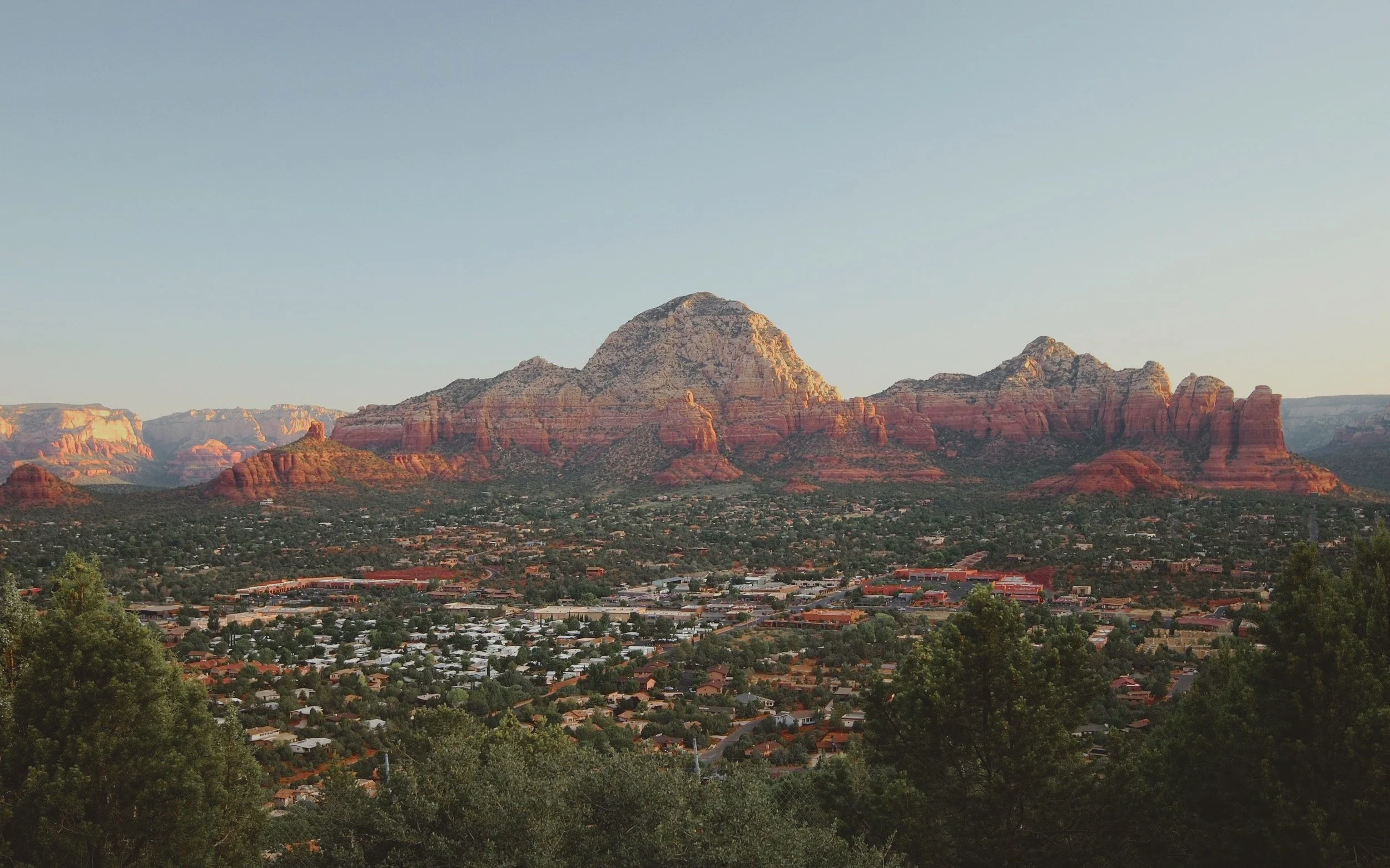
Known for: uplifting, energizing energy and a sense of perspective.
The walk: a short climb from the small parking area to the viewpoint, or the longer Airport Loop trail (about 3.5 miles) for more time with the land.
Good to know: parking is very limited and fills quickly, especially near sunset. Arrive early, or get dropped off.
Cathedral Rock
Cathedral Rock is one of the most photographed formations in Arizona, its spires rising high above Oak Creek. Many people consider it the most feminine of Sedona’s vortexes, and it’s closely tied to water: its reflection in Oak Creek at Red Rock Crossing is one of the most iconic views in the Southwest.
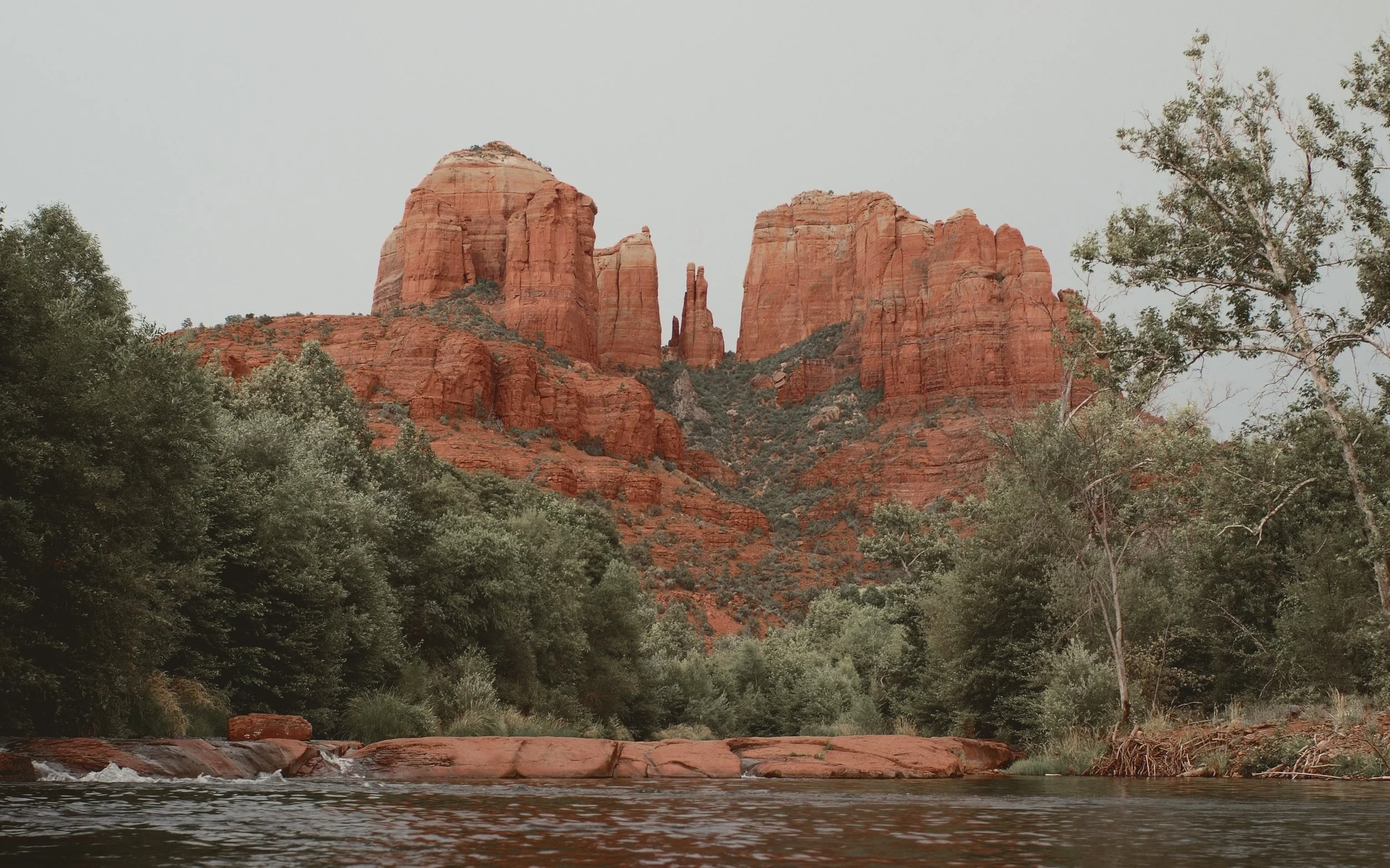
Known for: nurturing, emotional energy, ideal for healing and releasing.
The walk: you can feel the energy from the creek side without climbing. The Cathedral Rock Trail itself is short (about 1.1 miles round trip) but steep, with a hands-on scramble near the top.
Good to know: the free Sedona Shuttle runs Thursday through Sunday (daily during spring break and some holidays), and during shuttle hours the Cathedral Rock trailhead is closed to private vehicles. If you park here outside shuttle hours, a Red Rock Pass is required.
Bell Rock
Bell Rock is the bell-shaped formation you’ll see first when driving into Sedona from the south, near the Village of Oak Creek. Many people say they feel its energy before they even reach it.
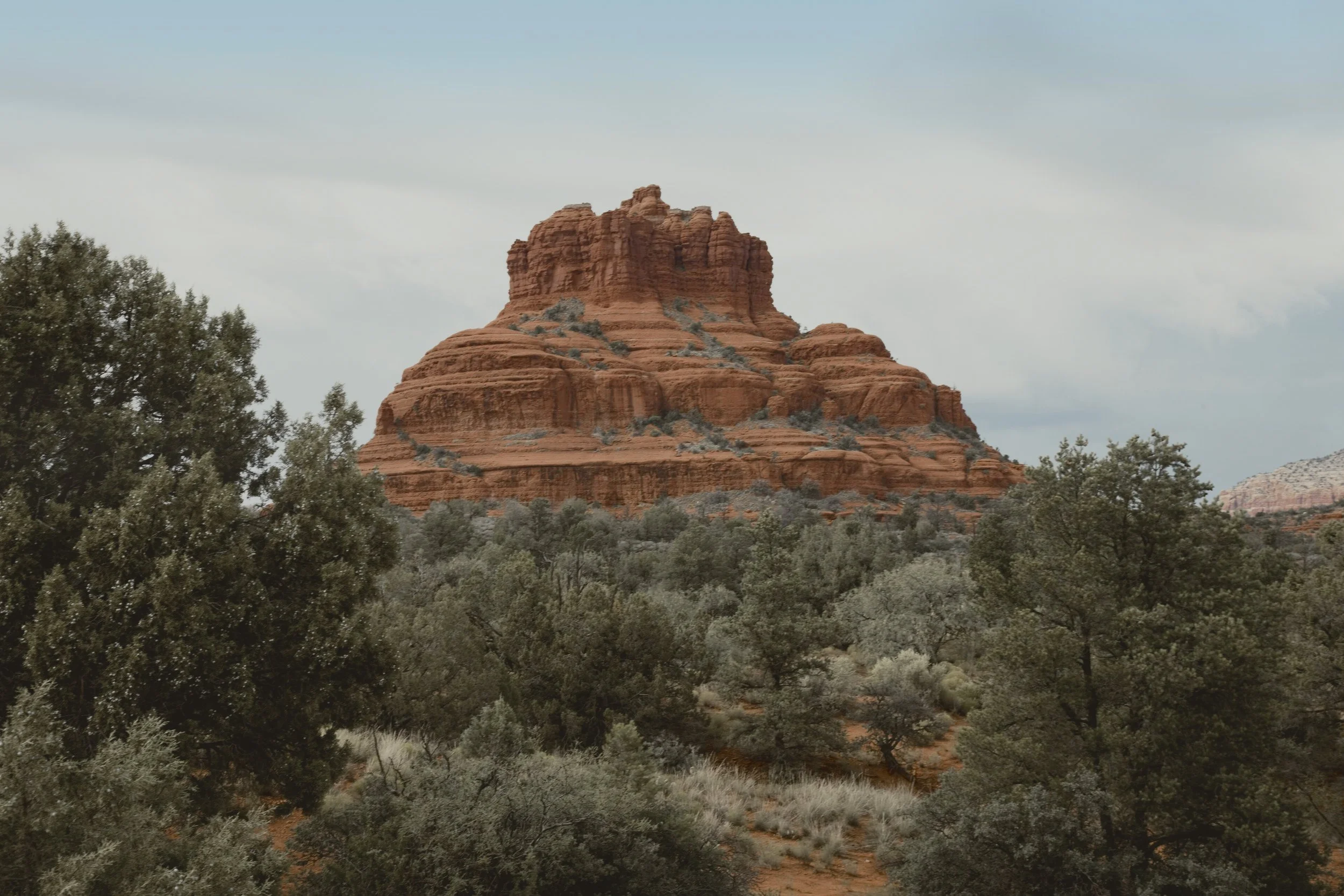
Known for: strong, energizing energy and a sense of personal power.
The walk: the Bell Rock Pathway is an easy, mostly flat walk around the base. Climbing higher on the rock is possible, but there’s no marked route.
Good to know: it has its own parking lots off Highway 179 (a Red Rock Pass is required to park), and it’s one of the most accessible vortexes for all fitness levels.
Boynton Canyon
Boynton Canyon is a beautiful box canyon in West Sedona, and it’s considered sacred land by the Yavapai people, whose creation story is associated with this place. Near the canyon’s mouth stands the slender rock spire known as Kachina Woman.
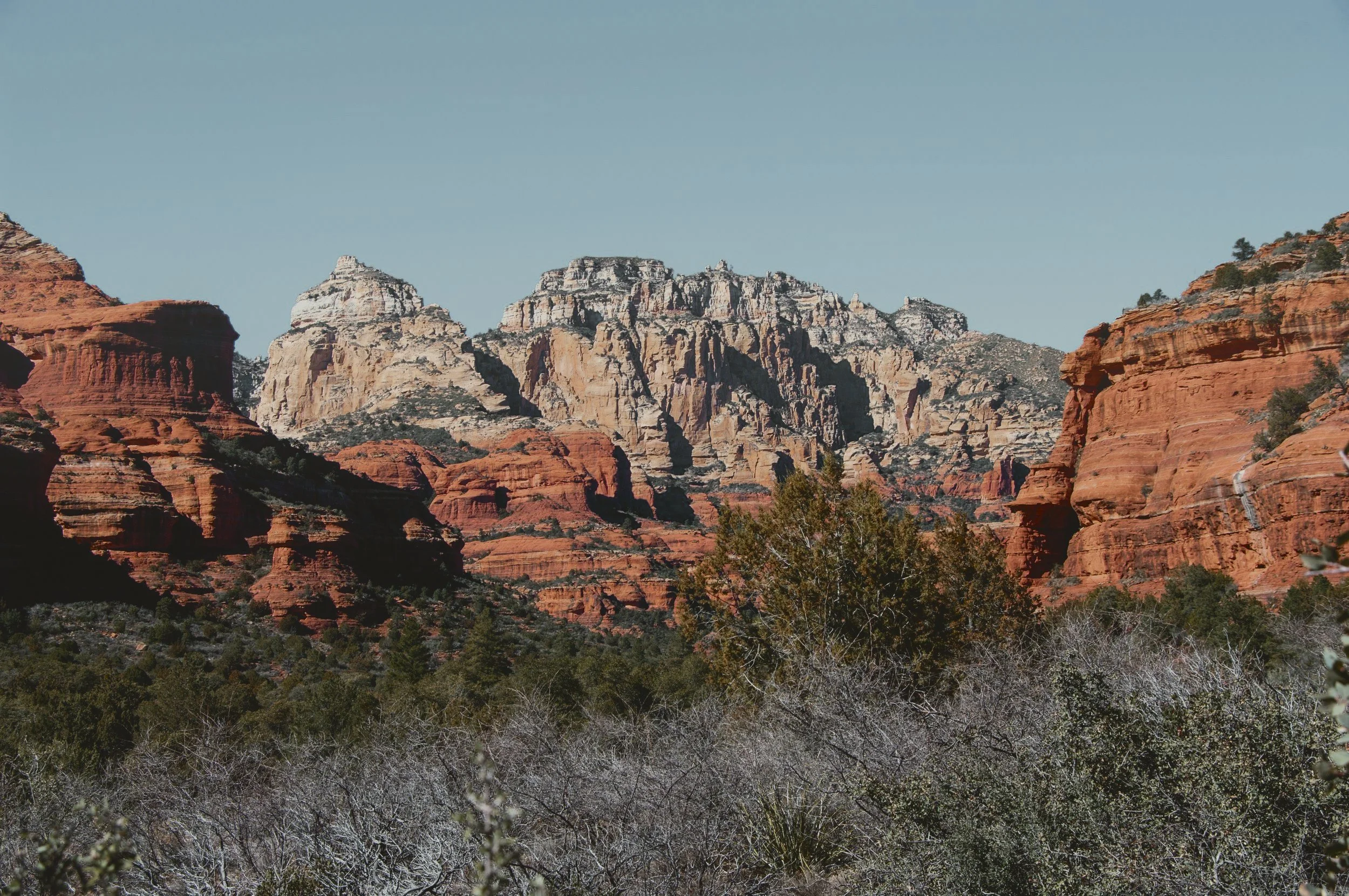
Known for: balanced energy, said to harmonize masculine and feminine.
The walk: a short side trail leads to the Kachina Woman area and the vortex. The full Boynton Canyon Trail is longer (about 6 miles round trip) and easy to moderate.
Good to know: a Red Rock Pass is required. This is a deeply sacred place for Native peoples, so visit quietly and respectfully.
The Sedona Vortexes at a Glance
Airport Mesa (above central Sedona): short climb, or 3.5-mile loop. Uplifting energy; best for sunset and perspective.
Cathedral Rock (Oak Creek, south of town): creek side, or steep 1.1-mile trail. Nurturing energy; best for healing and release.
Bell Rock (Village of Oak Creek): easy pathway around the base. Energizing energy; best for personal power and first-timers.
Boynton Canyon (West Sedona): short side trail, or 6-mile trail. Balanced energy; best for harmony and reflection.
When to Visit Sedona
Spring (March to May). Mild, pleasant weather and wildflowers make this one of the most popular times to visit. Expect crowds, especially during spring break.
Fall (September to November). Warm days, cooler nights, and golden light. Many people consider this the best time of year for vortex visits.
Summer (June to August). Days are hot, so visit early in the morning or near sunset. Afternoon monsoon storms are common from July to September, so come down from exposed areas if lightning is near.
Winter (December to February). Quieter and cooler, with the occasional dusting of snow on the red rocks. Wear layers.
Sunrise and sunset. These are the most magical times at any vortex, and the quietest for meditation.
What to Bring to a Sedona Vortex
For a short visit, you don’t need anything special except your sense of adventure. For a longer or deeper experience, plan for the weather.
Water. The air is very dry, so drinking water is a must.
Sun protection. Sunscreen, a hat, and sunglasses, especially in summer.
Layers. Temperatures swing widely between morning and afternoon.
Sturdy shoes. The red rock can be slippery and uneven.
A Red Rock Pass. It’s required at many trailheads. You can buy one at machines at the trailheads or at local visitor centers, and an America the Beautiful pass is accepted instead.
A trail map for anything beyond the four main sites.
A journal to record what you feel, see, and receive.
A Simple Sedona Vortex Connection Ritual
You don’t need to drive to every vortex to feel the energy. In fact, rushing from site to site in the car is the surest way to miss it. Choose one, get out, walk around, and give yourself time.
What you need:
A comfortable spot to sit at a vortex site
5 to 10 minutes
Your journal (optional)
Steps:
Arrive slowly. Find a quiet place to sit, away from the busiest paths.
Ground yourself. Place your feet or hands on the earth and take a few slow breaths. Feel yourself settle.
Set your intention. Remember that a vortex amplifies what you bring. Silently name what you’d like to bring into focus, whether peace, clarity, healing, or simply openness.
Soften your gaze. Look at the rock formation in front of you, or close your eyes.
Imagine the energy. Ask yourself: if I could see the energy of this place, what would it look like? Let your imagination answer without judging it. You might sense a spiral, light or color, a sound, or an image.
Notice your body. Pay attention to any physical sensations, such as warmth, tingling, or relaxation.
Notice your thoughts. What memories, ideas, or insights come to mind?
Give thanks. When you’re ready, thank the land for its energy, and slowly open your eyes.
Trust what you imagine. Your imagination is one of the main ways the subtle energy of a vortex reaches your awareness. For a deeper guide to what you might experience, see our guide to traveling to an energetic vortex.
Who Discovered the Sedona Vortexes?
In a sense, no one discovered the Sedona vortexes; they’ve always been here. The term “vortex” is usually credited to the psychic and spiritual channel Page Bryant, who first used it to describe Sedona’s energy sites in 1980. Author Dick Sutphen’s workshops and seminars then helped many people learn to connect with the energy, and Sedona’s reputation as a spiritual center grew from there.
Long before that, Sedona was home to many Native peoples:
The Archaic peoples lived throughout the Southwest as far back as 5,000 BC.
The Sinagua lived in the region from about AD 600 to 1400 and built the cliff dwellings still visible at Palatki and Honanki. It’s believed that when they left, they moved north to the Hopi mesas.
The Yavapai and Apache peoples have lived in the Sedona area in more recent centuries.
Did they know about the vortexes? Native peoples answer that question differently, and it isn’t for outsiders to answer for them. What is certain is that Native peoples considered this land sacred, as shown by the Yavapai creation story associated with Boynton Canyon.
Respecting the Land
Honor Sedona’s vortexes the way you’d honor any sacred site: as a guest.
Stay on the trails. The desert soil is fragile, and stepping off the trail can damage plants that take years to recover.
Don’t build rock piles or medicine wheels. Rearranging rocks disturbs the land, and the forest service regularly has to dismantle them. Leave the land as you found it.
Leave no trace. Pack out everything you bring, including offerings like fruit, crystals, or flowers.
Take nothing. Don’t remove rocks, plants, or artifacts, especially at Native heritage sites.
Be quiet and considerate. Others may be meditating or praying nearby.
After Your Vortex Visit
Ground yourself. Vortex energy can leave you buzzing. Walk barefoot, eat a solid meal, or try our grounding meditation to come back to earth gently.
Drink plenty of water. Sedona’s dry air dehydrates you quickly.
Journal. Write down what you felt, saw, and received while it’s fresh.
Be gentle with your emotions. Because a vortex amplifies what’s already inside you, feelings may surface in the days afterward. Let them come, and treat yourself with kindness.
Find your own power places. Sedona is just one of the world’s sacred sites. An astrocartography reading can show you which places on Earth resonate most with your own birth chart.
Frequently Asked Questions
Where are the vortexes in Sedona?
Sedona’s four main vortexes are Airport Mesa, just above central Sedona; Cathedral Rock, beside Oak Creek south of town; Bell Rock, near the Village of Oak Creek off Highway 179; and Boynton Canyon, in West Sedona. Many people feel that the whole Sedona area carries vortex energy, but these four sites are where it’s said to be strongest.
Which Sedona vortex is the most powerful?
There’s no single most powerful vortex, because everyone experiences the energy differently. Bell Rock and Airport Mesa are often described as the most energizing, Cathedral Rock as the most nurturing, and Boynton Canyon as the most balanced. The most powerful vortex for you is the one where you feel the strongest connection.
Do you need a pass to visit the Sedona vortexes?
A Red Rock Pass is required at many Sedona trailheads, including Cathedral Rock and Boynton Canyon. Day, week, and annual passes are available, and an America the Beautiful pass is accepted instead. During shuttle hours, the Cathedral Rock trailhead can only be reached by the free Sedona Shuttle. Always check current rules before you go.
What does vortex energy feel like?
Most people find vortex energy enjoyable and positive. Common experiences include feeling peaceful or “at home,” tingling in the hands, warmth, pressure at the crown of the head, strong emotions, or a rush of new ideas. Some people sense the energy as a spiral, light, color, or sound. Others feel nothing obvious at first, and that’s completely normal.
Can a vortex make you feel uncomfortable?
Occasionally. Because a vortex amplifies what you bring, it can bring buried emotions like sadness or grief to the surface. A few people feel off-balance or get a mild headache. These experiences are uncommon and usually pass quickly. Grounding yourself, drinking water, and being gentle with yourself can help.